
Public EV Charging Networks Explained: Apps, RFID and Contactless in 2026
The British public EV charging network has matured dramatically by 2026, with over 65,000 connectors installed across the UK according to GOV.UK data. Rapid DC hubs delivering up to 350 kW now line most motorway services, while on-street lamp-post and bollard chargers rated at 7 kW provide essential top-ups in residential areas where 40 percent of households lack off-street parking. Destination chargers at supermarkets and retail parks typically offer 22 kW Type 2 points, ideal for a two-hour shop that adds 80 miles of range. New drivers quickly learn that understanding the patchwork of operators from Gridserve and BP Pulse to Pod Point and Ionity is essential to avoid range anxiety on journeys beyond the average 180-mile real-world EV range.
Payment methods have evolved through three distinct eras. The early app-per-network chaos required drivers to download six or seven different applications, each demanding separate account setup and payment cards. RFID cards offered a simpler alternative, with many networks issuing plastic fobs that authorised charging at rates between 45 and 85 pence per kWh. By 2026 the majority of rapid DC units at motorway services feature contactless bank card readers accepting Visa and Mastercard directly, eliminating the need for apps or RFID for most 150 kW and 350 kW sessions. This shift has reduced friction dramatically, though roaming aggregator apps such as Zapmap and ChargePoint still provide the best overview of live availability across operators.
The Motorway Rapid DC Landscape
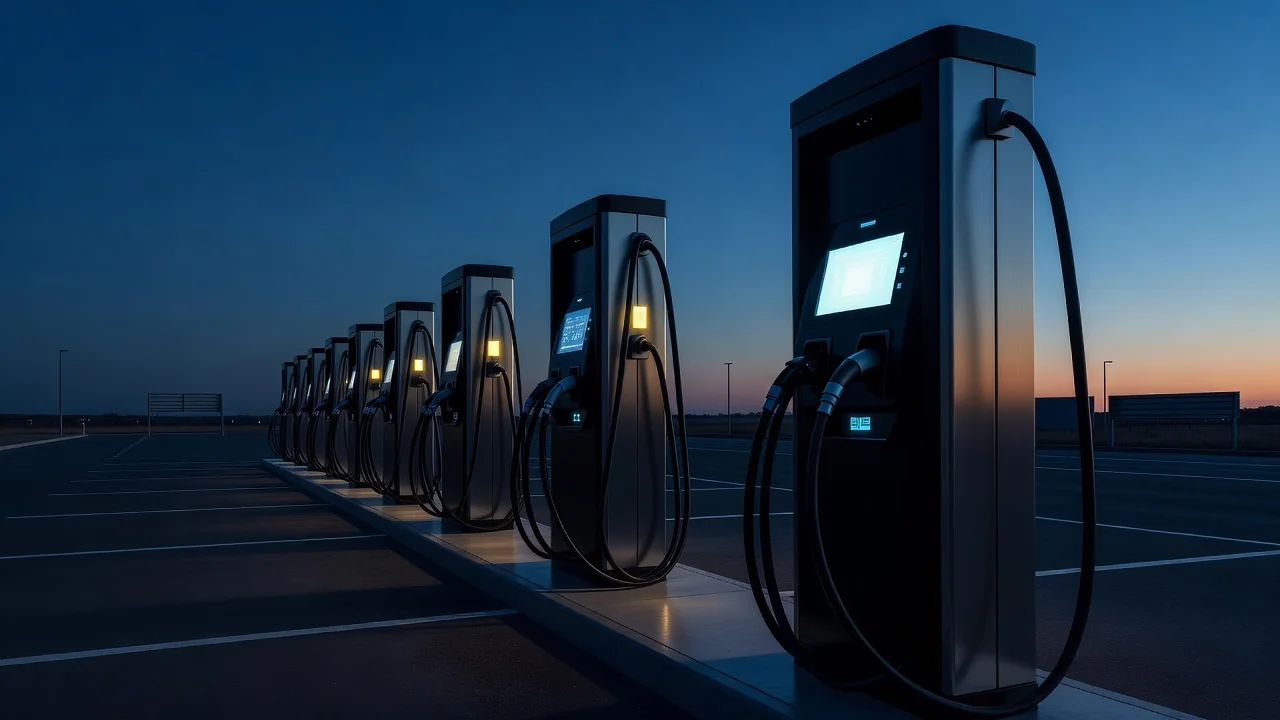
Motorway service areas now host the backbone of long-distance EV travel in Britain. Operators such as Gridserve and MOTO have installed clusters of 150 kW to 350 kW CCS2 chargers capable of adding 200 miles in 20 minutes at peak output. Most hubs feature between six and twelve stalls, with Ionity sites typically charging 79 pence per kWh while BP Pulse ultra-rapid bays can reach 85 pence outside off-peak windows. Live status updates in aggregator apps prove vital because occupancy at busy junctions like Newport Pagnell can exceed 80 percent on Friday evenings. Drivers should always check recent check-in timestamps before diverting off the M1 or M25.
On-Street Residential Charging
Lamp-post and pavement bollard chargers have transformed kerbside parking for the 11 million UK households without driveways. These 7 kW Type 2 units from Char.gy and Ubitricity typically cost 45 to 55 pence per kWh and are activated via the operator’s smartphone app or RFID card. Sessions are usually limited to four hours to encourage turnover, with some boroughs imposing £12 overstay penalties after the grace period. Reliability varies by council area, yet Zapmap’s crowd-sourced data showing recent successful charges helps drivers avoid faulty 22 kW bollards in cities such as Manchester and Bristol. Overnight top-ups delivering 25 miles per hour of charging make these units perfect for topping up after the daily commute.
Destination Charging at Retail Parks
Supermarket and cinema car parks represent the most convenient charging opportunities for many EV owners. Tesco, Sainsbury’s and Lidl have rolled out 7 kW and 22 kW points that often remain free for customers during shopping, although non-shoppers face 35 pence per kWh after the initial two-hour window. These Type 2 chargers rarely offer the 150 kW speeds of motorway hubs but deliver 60 miles of range during a standard weekly shop. Apps display exact stall locations and current status, preventing wasted journeys to full or out-of-order bays. Many sites now include dedicated EV parking bays clearly marked with painted lightning bolts and 3.5-metre wide spaces.
Understanding Pricing Structures
Public charging tariffs follow two main models that can confuse newcomers. Per-kWh billing, favoured by Gridserve and most 2026 rapid chargers, charges between 48 and 89 pence depending on speed and time of day, making costs predictable at roughly 8 pence per mile. Per-minute tariffs still exist on some older 50 kW units, where a £0.45 connection fee plus 2 pence per minute can inflate costs if the battery approaches 80 percent state of charge and the rate tapers. Overstay charges of £10 to £20 per hour after the paid session encourage drivers to move on once their vehicle reaches 80 percent. Several networks now offer off-peak discounts of up to 25 percent between 11pm and 6am at selected motorway locations.
- Always open the aggregator app before leaving home to locate chargers with at least four available stalls.
- Register a contactless bank card on your phone for rapid units to avoid app downloads at the services.
- Carry one universal RFID card covering the three largest networks as backup when mobile signal is poor.
- Check the percentage of working chargers shown in the app rather than relying on total stall count.
- Set a low-battery alert at 20 percent to reach a rapid hub with at least 40 miles of range remaining.
- Photograph the charger number and any fault codes if a session fails to help the operator resolve issues quickly.
First-Week Survival Plan Without Home Charging
New EV drivers without driveway access should begin by downloading Zapmap, PlugShare and the apps of the two largest local networks before collecting their car. On day one, locate the nearest 22 kW on-street charger within 400 yards of home and practise connecting using both the app and RFID card. Plan the first supermarket trip to coincide with a destination charger bay, aiming to add 15 kWh while buying the weekly groceries.
By day three, test a 150 kW motorway rapid charger during off-peak hours to experience 350 kW peak speeds and understand the tapering curve after 60 percent state of charge. Keep a £5 note and contactless card in the door pocket for any pay-and-display parking near lamp-post chargers. By the end of the first week most drivers establish a reliable routine using two or three trusted locations that together provide 120 miles of weekly range.
| Charger Type | Typical Power | Cost Range | Best Use |
|---|---|---|---|
| Rapid DC | 150-350 kW | 65-89p/kWh | Motorway journeys |
| Destination | 7-22 kW | 0-55p/kWh | Shopping top-ups |
| On-street | 7 kW | 45-60p/kWh | Residential overnight |
| Ultra-rapid | 350 kW | 79p/kWh | Long trips under 30 min |
| Workplace | 11 kW | Free-40p/kWh | Daytime employee use |
Mastering these networks turns public charging from a source of stress into a routine part of EV ownership, delivering convenience and cost savings compared with traditional petrol forecourts for most British drivers.