
How Much EV Range Do You Really Need? The 2026 Reality Check
The average UK driver covers fewer than 25 miles a day according to Department for Transport figures, yet many still chase 400-mile EVs that cost thousands of pounds extra in battery capacity they will never use. A typical 250-mile real-world EV can complete an entire working week on a single home charge at 7 kW overnight, returning to 80 percent state of charge by morning on a 7.4 kW wallbox.
At current off-peak rates of 7.5 pence per kWh on Octopus Energy tariffs, that weekly top-up costs less than £4. Winter efficiency losses of 20-30 percent and 70 mph motorway consumption that can rise by 35 percent still leave most commuters well within range, provided they have access to a home charger. Paying for an extra 100 miles of advertised range often adds over £3,000 to the on-the-road price while delivering only marginal benefits for the typical driver.
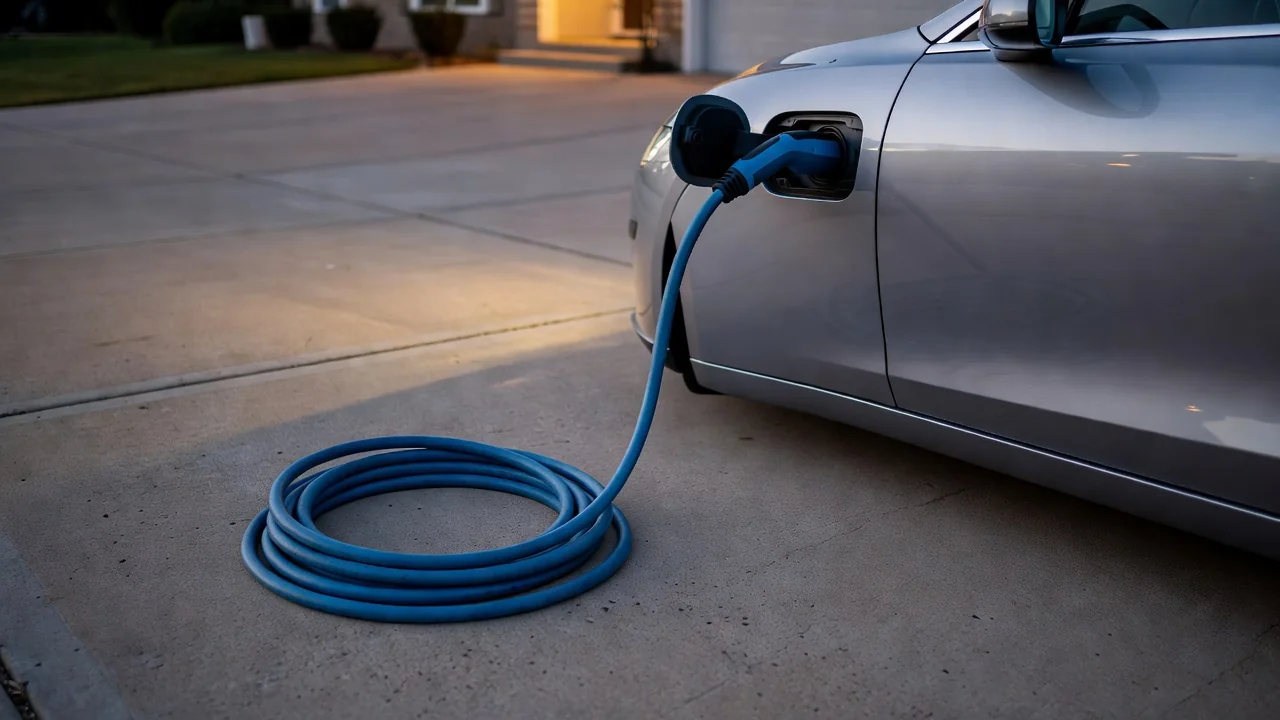
Daily commuting reality versus brochure numbers
Most UK commuters travel fewer than 25 miles each way, according to the National Travel Survey 2025. A 250-mile EV therefore has more than enough buffer to manage five working days between charges even when winter temperatures reduce efficiency by 25 percent. At 3.5 miles per kWh in cold weather a 64 kWh battery still provides 160 miles of usable range after reserving 10 percent at each end. This means the typical driver returns home with 60-70 percent state of charge, allowing a cheap overnight top-up rather than expensive rapid charging. The 10-to-80 percent window used on longer trips further reduces the effective daily requirement because drivers rarely need to charge from empty.
Motorway running at the UK 70 mph limit increases consumption by around 30 percent compared with 50 mph A-road driving. Real-world tests show a drop from 4.2 miles per kWh to 3.1 miles per kWh, yet even this leaves most 250-mile EVs capable of 170 miles between charges. The extra battery capacity required to add another 50 miles at speed costs significantly more than installing a home charger, which delivers 25-30 kWh for under £2 at off-peak rates. For 90 percent of drivers the home charger matters far more than additional range advertised on a specification sheet.
The importance of home charging infrastructure
Access to a 7 kW home charger transforms the ownership experience far beyond what an extra 100 miles of range can achieve. At 7.5 pence per kWh the cost to add 200 miles of range overnight is approximately £4.50 compared with £25-£35 for the same energy from a public CCS2 rapid charger at 45-55 pence per kWh. This differential of over 500 percent makes frequent public charging financially unsustainable for anyone without home charging. Type 2 connectors at 7 kW or 11 kW deliver full overnight replenishment for most daily drivers, eliminating the need for larger, heavier and more expensive battery packs.
Calculating your personal range requirement
Begin by logging your mileage for two normal weeks using the trip computer or a simple notebook. Add 40 percent to the highest weekly total to account for detours, unexpected trips and headwinds. Compare this adjusted figure against real-world range data rather than WLTP numbers. For example, if your longest week shows 280 miles then your adjusted need is 392 miles. An EV with 280 miles of real-world range in mixed conditions will comfortably cover this when charged at home each night. This self-test method removes guesswork and prevents overbuying battery capacity that adds weight, cost and charging time.
Building In Winter and Motorway Losses
Winter losses of 20-30 percent must be built into the calculation. A vehicle rated at 260 miles WLTP will typically return 180-200 miles in January UK conditions when the heat pump and cabin heating are active. Motorway driving at 70 mph further reduces this by another 15-20 percent on long legs. The 10-to-80 percent usable window on road trips means only 70 percent of the displayed range is normally available between charges, so plan buffers accordingly. Adding a 15 percent safety margin for unexpected weather or diversions provides peace of mind without requiring an oversized battery.
When a bigger battery genuinely makes sense
Drivers without home charging who rely entirely on public networks benefit from larger batteries because they reduce the frequency of stops. Those regularly completing 200-mile days or towing caravans and trailers also gain from the extra capacity because sustained high loads increase consumption dramatically. CHAdeMO and CCS2 rapid charging speeds peak between 10 and 80 percent state of charge, so a bigger pack allows more miles to be added during the fastest portion of the charge curve. For these use cases the additional upfront cost of £3,000-£5,000 can be justified by reduced charging stops and greater flexibility.
- A 250-mile real-world EV covers the weekly commute for 85 percent of UK drivers without midweek charging.
- Home charging at 7 kW costs 7.5 pence per kWh versus 50 pence at public rapid chargers.
- Winter efficiency drops of 25 percent still leave most daily drivers with 50 percent charge remaining.
- Logging two weeks of mileage then adding 40 percent gives an accurate personal range target.
- Larger batteries only pay off for those without home charging or who regularly drive over 180 miles daily.
- The 10-80 percent charging window means 70 percent of displayed range is typically usable on trips.
| Scenario | Weekly miles | Real-world range needed | Battery size (kWh) |
|---|---|---|---|
| Typical commute | 140 | 200 | 58-64 |
| Weekly motorway | 350 | 280 | 75-82 |
| No home charge | 280 | 320 | 85-95 |
| Towing regular | 420 | 350 | 90+ |
| Urban only | 90 | 160 | 50-55 |
Most UK buyers will discover their true range needs are far lower than marketing suggests once they complete the two-week mileage test and factor in home charging at 7-11 kW. Choosing an EV with 220-280 miles of real-world range, a Type 2 home charger and sensible buffer planning delivers lower purchase prices, reduced weight and faster charging times without compromising daily usability for the vast majority of drivers.