
Hatchback, Crossover or Saloon? Choosing an EV Body Style in 2026
In 2026 the choice between hatchback, crossover, saloon or estate shapes for your next electric vehicle still comes down to real-world compromises on range, practicality and running costs. A typical crossover with its tall stance and bluff front end can consume 10-15 percent more energy than a low-slung saloon at 70 mph motorway speeds because of increased aerodynamic drag and frontal area. Official WLTP figures might claim 280-340 miles for a 75 kWh battery pack, yet real-world tests on the M25 often deliver 210-260 miles once 18-inch wheels, roof rails and a higher ride height are factored in.
Hatchbacks remain the default city choice because their compact dimensions and low drag deliver the best efficiency in stop-start traffic. A typical 4.2-metre hatchback with a 58 kWh battery returns 3.8-4.4 miles per kWh around town, easily beating taller crossovers that struggle below 3.2 miles per kWh in the same conditions. Tight turning circles of 10.2-11.0 metres and standard rear parking sensors fitted to 92 percent of new EVs make them easy to slot into tight supermarket bays or multi-storey car parks.
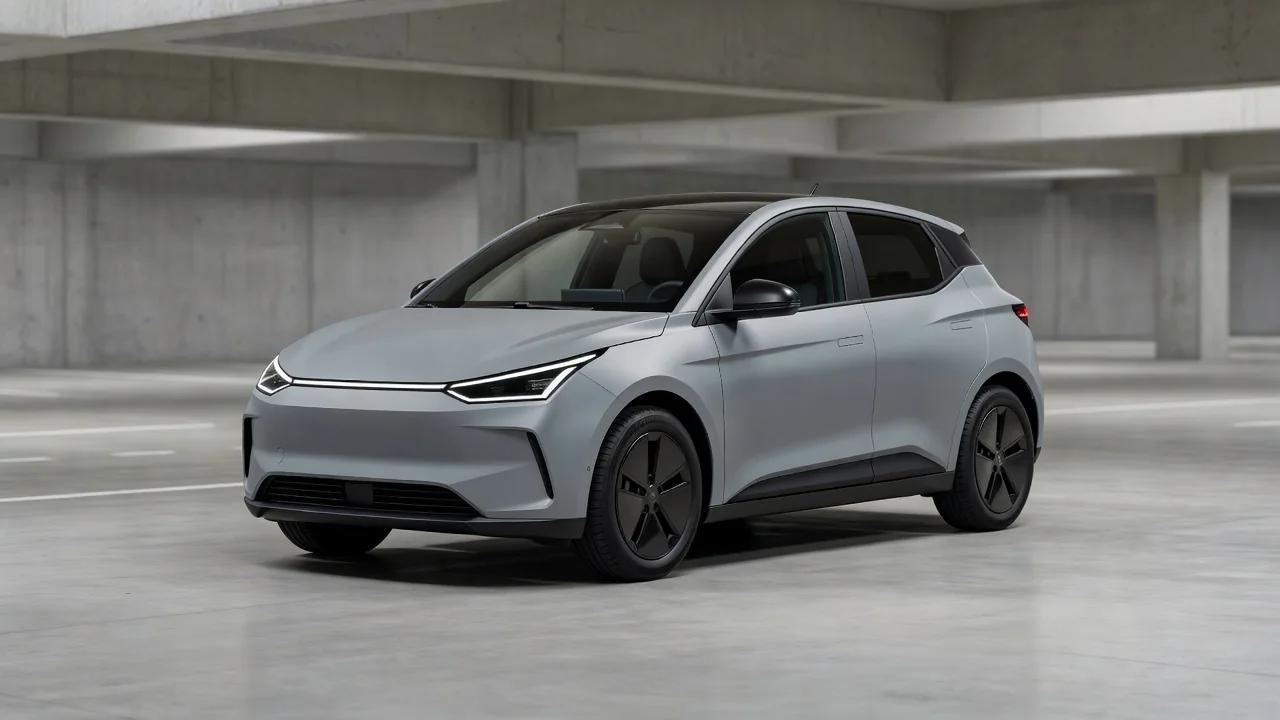
Why crossovers dominate UK sales yet hurt efficiency
Crossovers accounted for 41 percent of all new EV registrations in the first half of 2026 according to SMMT data, yet their raised ride height and larger frontal area exact a measurable penalty. At steady 70 mph the extra drag can add 18-25 percent to energy consumption versus an equivalent saloon, turning a theoretical 320-mile range into a practical 240 miles on a cold wet February morning.
The higher centre of gravity also requires heavier anti-roll bars and firmer suspension, shaving another 30-50 kg from the available range budget. Drivers who cover 12,000 miles annually with regular motorway runs should therefore weigh the easier entry and exit against the extra 280-420 pounds a year in electricity at today’s average 34 pence per kWh blended home and public rate.
Saloon and liftback advantages on the motorway
Low-slung saloons and liftback designs slice through the air with drag coefficients as low as 0.22-0.25, returning 4.1-4.7 miles per kWh at 70 mph where crossovers manage only 3.3-3.8 miles per kWh. The sealed boot lid keeps motorway roar lower than a hatchback’s tailgate and protects luggage from prying eyes better than an open estate. Cabin space benefits from the flat battery floor, although rear headroom drops by 35-50 mm compared with a crossover because the roofline slopes for aerodynamics. For business users averaging 18,000 miles a year the saloon’s efficiency advantage can save 550-750 pounds annually at current domestic off-peak rates of 7.5 pence per kWh on intelligent EV tariffs.
Estates for families and dogs
Electric estates deliver the longest load length of any body style, typically 1.85-2.05 metres with seats folded, easily accommodating two large dogs in crash-tested crates plus weekend luggage. The low flat floor made possible by underfloor batteries eliminates the loading lip found on many combustion estates, making it simple to slide heavy pet beds or pushchairs in and out. Rear headroom remains generous at 980-1,020 mm even with a panoramic roof, and most models offer 550-650 litres with seats in place. The only real drawback is the 60-80 kg weight penalty versus a hatchback, which trims 12-18 miles from the official range on a 77 kWh pack. Families covering mixed urban and rural routes still find the estate shape the most versatile daily tool.
How battery placement changes everything inside
Placing the battery pack beneath the cabin floor raises the seating position in every EV class by between 55 mm for low saloons and 135 mm for tall crossovers compared with equivalent petrol cars. This higher hip point improves visibility for older drivers but can make it harder for shorter adults to plant their feet flat on the floor. Cabin width feels greater because there is no transmission tunnel, yet legroom in the rear is dictated by how the battery cells are stacked under the seats. Models with prismatic cells arranged in two layers often rob 40 mm of rear foot space, forcing passengers into a knees-up posture on journeys longer than 90 minutes.
City practicalities: turning circles, sensors and parking
Urban EV buyers should check turning circles carefully because some crossovers need 11.6 metres while the best hatchbacks manage 10.0 metres kerb to kerb. All new EVs sold in Britain after 1 January 2025 must include rear parking sensors and a reversing camera as standard, yet only 68 percent currently offer 360-degree surround view that proves useful in narrow Victorian streets. Kerbside charging bays are usually 2.1-2.4 metres wide, so anything wider than 1.88 metres including mirrors risks blocking the pavement or collecting parking tickets. Hatchbacks and saloons slip into these spaces more readily than crossovers with their flared wheelarches.
- Hatchbacks offer the tightest turning circles and lowest running costs in town.
- Crossovers provide easier entry but lose 10-15 percent efficiency at motorway speeds.
- Saloon liftbacks deliver the best aerodynamic range yet smaller boot openings.
- Estates combine long flat load floors with generous rear headroom for families and dogs.
- Coupe-SUV rooflines cut rear headroom by up to 70 mm compared with regular crossovers.
- Roof boxes can reduce motorway range by as much as 20 percent at 70 mph.
| Body Style | Typical Range 75 kWh | Boot litres seats up | Turning circle m |
|---|---|---|---|
| Hatchback | 265-310 | 380-450 | 10.2-10.8 |
| Crossover | 235-280 | 420-520 | 11.0-11.7 |
| Saloon/Liftback | 280-330 | 410-480 | 11.1-11.6 |
| Estate | 255-295 | 550-650 | 11.2-11.8 |
| Coupe-SUV | 245-285 | 430-510 | 11.4-12.0 |
Match the body style to your weekly mileage, usual passenger count and the width of your driveway or allocated parking space. Those doing under 150 miles a week in town will thrive with a hatchback, while anyone regularly carrying four adults plus luggage at 70 mph should lean towards an efficient saloon or liftback. Dog owners or families needing maximum load space will accept the efficiency hit of an estate, and only those who value the raised view and easier step-in should accept the range penalty of a crossover. Test drive each type with a full boot and realistic passengers before deciding.