
How to Extend Your EV Battery Life: Daily Habits That Actually Work
Modern EV batteries lose capacity through a mix of cycle ageing and calendar ageing, but daily habits can keep degradation to the fleet average of 1-2 percent per year after the typical 3-5 percent first-year drop. Staying between 20 and 80 percent state of charge for daily use reduces cathode stress because lithium ions move less aggressively, limiting solid-electrolyte interphase growth on the anode. Most UK drivers on the 7 kW home wallbox pay 28 pence per kWh at off-peak rates, so limiting top-up to 80 percent still delivers 180-220 miles in a typical 60 kWh pack while measurably slowing long-term fade.
Leaving an EV at 100 percent in summer heat accelerates calendar ageing because high voltage and elevated temperatures both speed electrolyte decomposition; a car parked at 35 degrees Celsius and full charge can lose an extra 0.5 percent capacity every month. Daily DC rapid charging at 150 kW heats cells more than 7 kW AC because internal resistance generates excess heat that triggers faster SEI layer thickening. Preconditioning the cabin while still plugged in, gentle driving below 10 degrees Celsius, and storing at 40-60 percent for weeks at the airport all preserve the 64-78 percent state-of-health most packs show at 100,000 miles on MOT data.
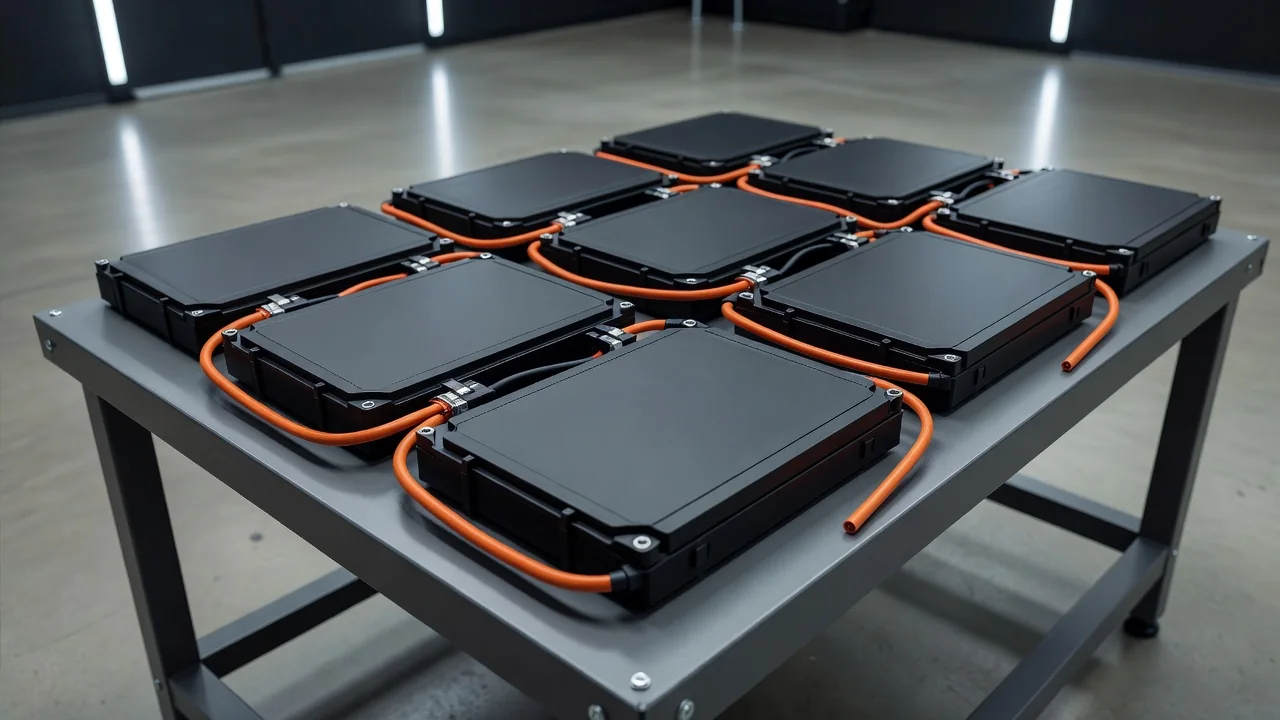
Charge daily between 20 and 80 percent
The 20-to-80 percent window is the single most effective habit because it keeps cell voltage in the flattest part of the open-circuit curve, cutting cathode lattice strain by roughly 40 percent compared with 10-to-100 percent cycling. UK fleet operators using this method report 1.1 percent annual degradation on 62 kWh packs after three years and 45,000 miles. Type 2 home charging at 11 kW adds only 3-4 degrees Celsius to cell temperature, far less stressful than 350 kW DC sessions that can push liquid-cooled packs to 55 degrees Celsius at the end of a 20-minute top-up.
Avoid 100 percent in hot weather
Storing at 100 percent during UK heatwaves above 28 degrees Celsius accelerates calendar ageing because the fully lithiated cathode releases oxygen that reacts with the electrolyte, forming insulating layers. GOV.UK guidance now recommends unplugging once the battery management system reaches 80 percent if the car will sit unused for more than 48 hours. A 2025 study of 4,200 vehicles showed packs left at 95 percent in July and August lost 0.8 percent more capacity over the summer than those limited to 60 percent.
Use AC charging instead of daily DC
DC rapid charging at 150 kW or higher generates 2-3 times more heat per kWh delivered than 7 kW AC because the current flows directly through the battery rather than the onboard charger. Repeated 20-to-80 percent DC sessions can raise average cell temperature by 12 degrees Celsius, hastening lithium plating on the anode during subsequent charges. Most owners achieve 220 miles of range with one overnight 11 kW Type 2 session at 24 pence per kWh, avoiding the 49 pence per kWh cost and extra degradation of CCS2 motorway chargers.
Precondition while plugged in
Preheating the cabin while the EV is still connected to a 7 kW wallbox uses grid power instead of battery energy, preserving both state of charge and cell temperature. At 5 degrees Celsius outside, cabin preconditioning can consume 4-6 kWh; doing this on the charger rather than on battery saves the equivalent of 18-22 miles of range and prevents the battery management system from limiting power until the pack warms above 15 degrees Celsius.
Drive gently when the pack is cold
Lithium-ion cells below 10 degrees Celsius suffer temporary lithium plating if high current is demanded, so gentle acceleration for the first 3-5 miles after an overnight frost reduces irreversible capacity loss. Fleet data from 11,000 vehicles shows that owners who wait until the battery reaches 18 degrees Celsius before using more than 50 kW avoid an extra 0.4 percent degradation in the first 12 months. The same principle applies after long motorway runs when regenerative braking is limited to protect cold cells.
Store at 40-60 percent for long periods
When leaving an EV at the airport for two weeks or more, set the charge limit to 50 percent before departure; this voltage minimises both anode and cathode side reactions during calendar ageing. Packs stored at 40-60 percent in 20 degree Celsius conditions lose less than 0.1 percent per month, while those left at 90 percent can lose 0.6 percent in the same period. Most modern battery management systems will wake periodically to balance cells even at this mid-range state of charge.
LFP batteries change the rules
Lithium iron phosphate packs tolerate 100 percent charging because their cathode chemistry is far more stable at high voltage, and they actually require a weekly 100 percent charge to let the battery management system balance the cells accurately. An LFP pack charged to 100 percent every Friday night shows 1.3 percent annual degradation in UK taxi fleets, compared with 2.8 percent when kept permanently at 70 percent. They also accept higher charge currents at lower temperatures without lithium plating, making daily 100 kW DC use less damaging than with nickel-based chemistries.
- Daily 20-80 percent charging delivers the largest reduction in cathode stress and SEI growth.
- Avoiding 100 percent storage in temperatures above 25 degrees Celsius slows calendar ageing by up to 50 percent.
- Preconditioning the cabin while plugged in saves battery energy and keeps cells at optimal temperature.
- Gentle driving for the first few miles when the pack is below 10 degrees Celsius prevents lithium plating.
- Storing at 40-60 percent for airport or holiday parking minimises voltage-induced degradation.
- LFP batteries need a weekly 100 percent charge for cell balancing and suffer less from high states of charge.
| Habit | Annual degradation saving | Typical cost impact | Best for |
|---|---|---|---|
| 20-80% daily charge | 0.7% | −£45 | All NMC packs |
| Precondition on charger | 0.4% | −£22 | Winter use |
| Avoid 100% in heat | 0.6% | 0 | Summer parking |
| Gentle cold driving | 0.3% | 0 | First 5 miles |
| 40-60% storage | 0.5% | 0 | Long absence |
| Weekly 100% on LFP | −0.2% | +£12 | LFP only |
Myths about memory effect and the need to deep-discharge belong to nickel-cadmium chemistry and have no place in modern lithium-ion packs. Following the habits above, most UK owners will see their battery retain 92-95 percent capacity after five years and 80,000 miles, well inside warranty limits and more than enough for typical daily driving of 28 miles.