
EV Battery Warranties Explained: What 8 Years and 100,000 Miles Really Cover
Most electric vehicle batteries in the UK come with a warranty of eight years or 100,000 miles, whichever comes first, and the manufacturer will usually repair or replace the pack if its certified state of health falls below 70 percent capacity. That 70 percent floor is the industry standard across brands sold by UK dealers, from 40 kWh city cars to 100 kWh SUVs. In real-world terms, a 64 kWh battery that has dropped to 44 kWh within the warranty window should trigger a free fix at an authorised workshop, provided the degradation was not caused by owner misuse. Drivers paying 34 pence per kWh on a public 150 kW CCS2 charger will notice the difference immediately when range shrinks from 250 miles to 170 miles on a full charge.
The warranty is separate from the standard three-year or 60,000-mile vehicle warranty and has nothing to do with the small 12V auxiliary battery that powers lights and the infotainment system. It covers only the high-voltage traction battery pack. Claims are not automatic; the dealer must connect diagnostic equipment to read the battery management system and produce an official state-of-health report. GOV.UK guidance reminds owners that unauthorised modifications or aftermarket repairs can void the cover instantly. Flood damage, repeated fast charging in temperatures above 40 °C, or using the car for motorsport also sit outside the terms.
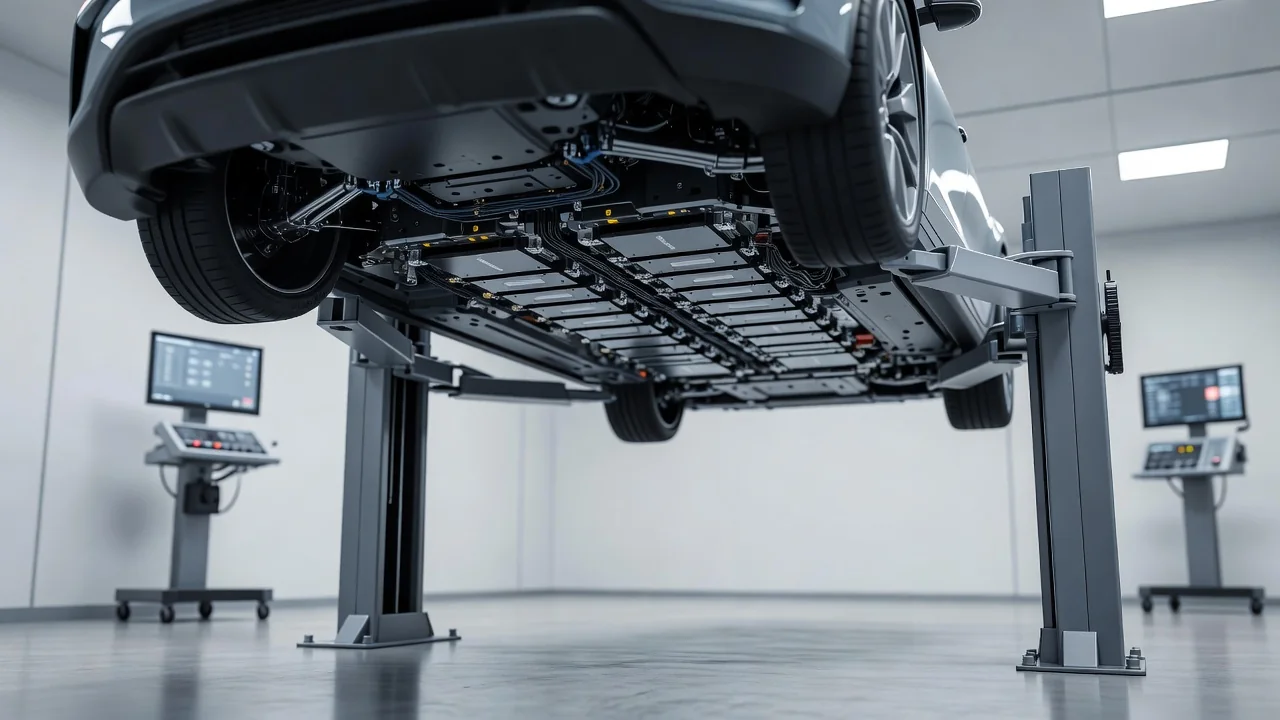
How the 70 Percent Capacity Rule Works in Practice
The 70 percent threshold is measured against the battery’s original nominal energy when new, not the usable figure displayed to the driver. A manufacturer using a 78 kWh gross pack with 75 kWh usable must still guarantee at least 54.6 kWh usable after eight years or 100,000 miles. If the diagnostic tool shows 52 kWh, the pack qualifies for attention. Most approved workshops use manufacturer-specific software that logs cell voltages, internal resistance and temperature history to confirm the reading. This data is uploaded to the brand’s central database before any repair decision is made.
Replacement is rarely a brand-new pack. Many makers now fit refurbished or “remanufactured” modules that have been tested to the same 70 percent standard. The process can take between three and ten working days depending on the model and parts availability. Owners are usually given a courtesy car or a contribution towards hire costs while the work is completed.
What Is Excluded from EV Battery Warranty Cover
Accidental damage such as driving through floodwater that reaches the battery casing is not covered, nor is corrosion caused by leaving the car with a permanently flat high-voltage battery. Using a non-Type 2 or non-CCS2 charger that damages the on-board inlet will also invalidate the claim. Repeatedly charging at 350 kW when the vehicle is only capable of 150 kW maximum is logged by the battery management system and can be used as evidence of misuse. Cosmetic damage to the battery cover or undertray does not qualify for replacement either.
Prorated Versus Full Replacement Policies
Some brands offer a full replacement if the battery drops below 70 percent within the first four years or 60,000 miles, then switch to a prorated contribution after that point. Others stick to a straight eight-year or 100,000-mile promise with no sliding scale. The exact policy is printed in the warranty booklet supplied with the car. Second owners should check the remaining time and mileage at the point of purchase because the clock does not reset when the vehicle changes hands.
Transferability and Value at Resale
Battery warranties are transferable to subsequent owners in the UK provided the service history is complete and the car has not been written off. A remaining four years and 45,000 miles of cover can add between £800 and £1,500 to the asking price of a three-year-old EV according to used-market data. Dealers will often print the latest state-of-health report and include it in the handover pack to reassure buyers. Private sellers should do the same to avoid disputes later.
Checks for Used EV Buyers
Always ask the seller for a state-of-health printout no more than three months old. Cross-check the mileage on that report against the odometer. Request a photocopy of the original battery warranty booklet showing start date and VIN. Have an independent EV specialist read the battery management system before completing the purchase; the fee of around £150 can save thousands if hidden damage exists. Finally, confirm whether any previous claims have been made against the traction battery.
- The 12V battery fitted to every EV usually carries only a two-year or 24,000-mile warranty and is not part of the high-voltage pack cover.
- State-of-health readings must be taken with official dealer equipment to be accepted under warranty.
- Capacity loss that stops at 72 percent after seven years will not trigger a repair.
- Refurbished battery packs supplied under warranty still carry the balance of the original eight-year term.
- Keeping the car plugged in at 20 percent charge when not in use helps reduce calendar ageing.
- Second owners inherit the exact remaining warranty period and mileage allowance.
| Warranty Period | Mileage Limit | Capacity Floor | Typical Repair Trigger |
|---|---|---|---|
| 8 years | 100,000 | 70% | Below 70% SOH |
| 8 years | 60,000 | 70% | Full replacement |
| 6 years | 80,000 | 75% | Some PHEVs |
| 5 years | 60,000 | 70% | Older models |
| 10 years | 150,000 | 65% | Long-range variants |
Understanding exactly what your EV battery warranty covers removes much of the anxiety around long-term ownership costs. Keep the service book up to date, avoid unauthorised repairs, and obtain a fresh state-of-health report every two years. The peace of mind is worth far more than the few minutes it takes at the dealer.